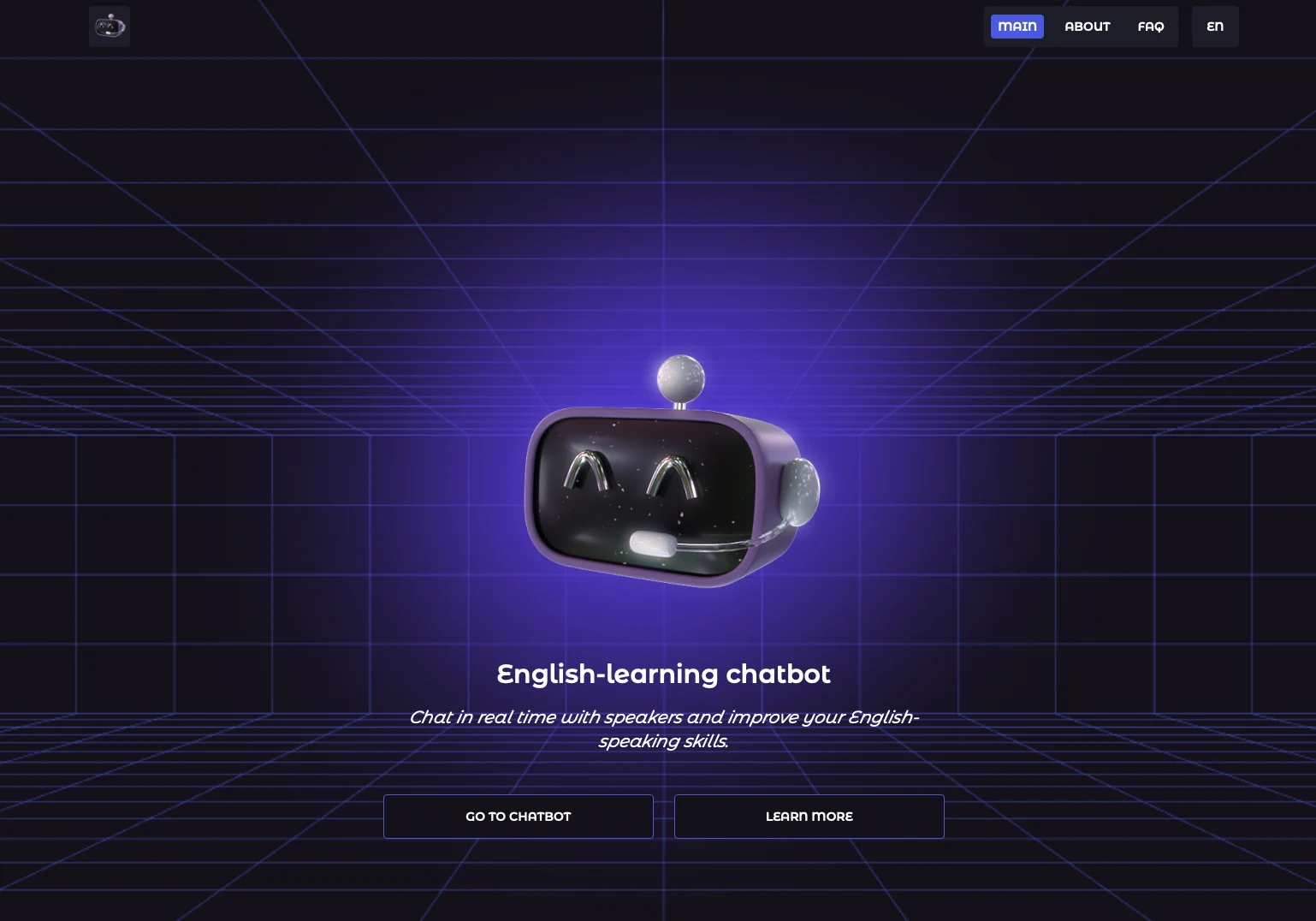
Positioning, content and an SEO landing page connected people looking for English practice with the Telegram product. Acquisition relied on organic traffic, without paid advertising
01 / The context
The context
Speak Hunt was a language-learning product built around conversational practice. It brought partner discovery, profiles, communication and learning activities into Telegram. The historical product focused on English practice; the wider idea was to reduce the distance between learning a language and using it
The gap between knowing and speaking
A learner can know vocabulary and grammar yet still struggle to find someone to speak with. Finding an available partner, understanding their level and starting a conversation are separate obstacles. The product problem was access to practice at the moment a learner was ready
The product hypothesis
Make finding a conversation partner easier inside an environment people already use. A familiar messenger could reduce the effort of getting started, while profiles and language levels could help learners choose a relevant partner. This is the product hypothesis, not a claim of a measured outcome
Organic acquisition
Positioning, content and an SEO landing page connected people looking for English practice with the Telegram product. Acquisition relied on organic traffic, without paid advertising
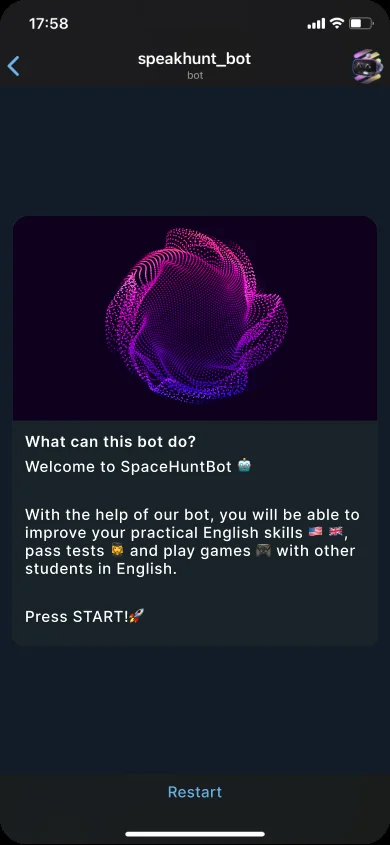
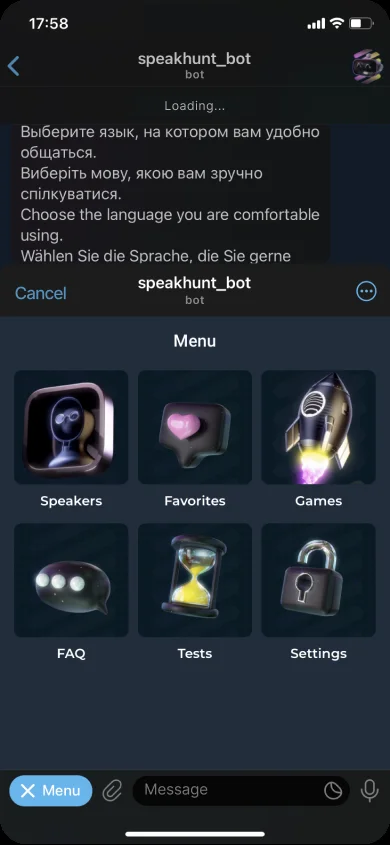
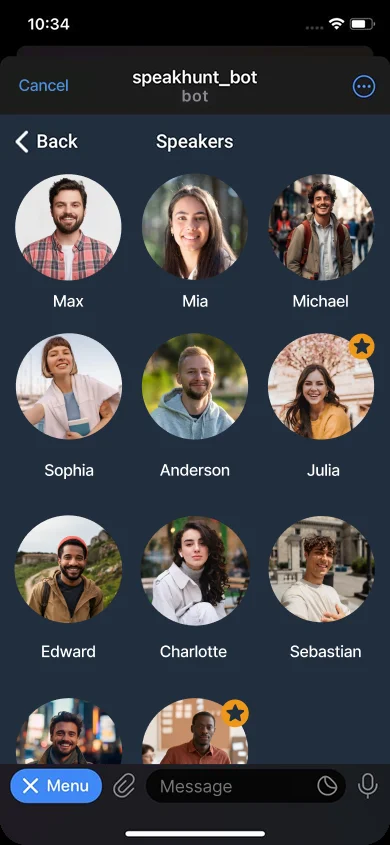
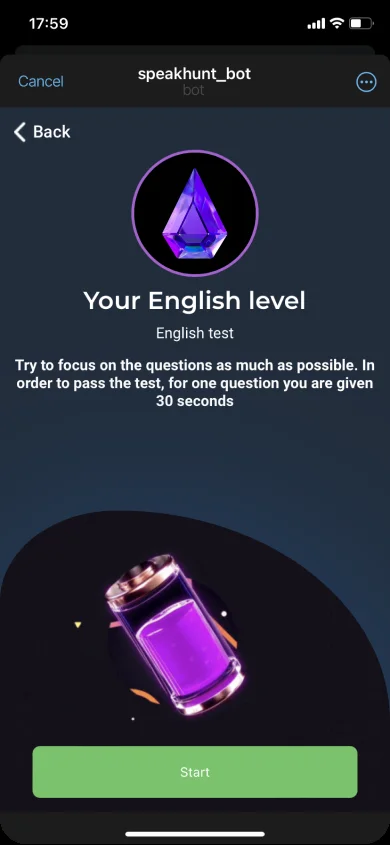
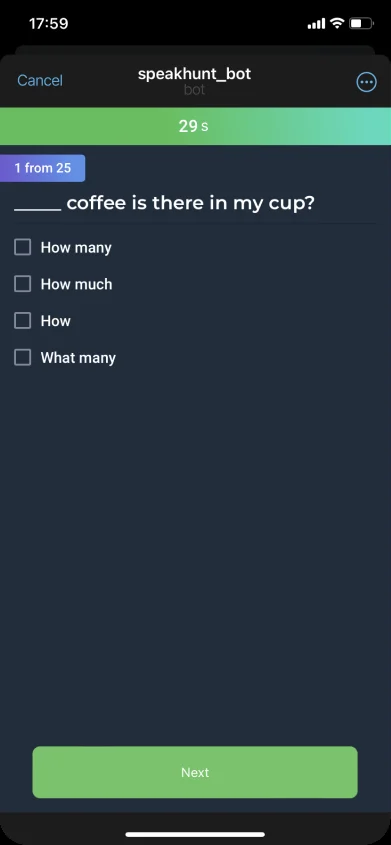
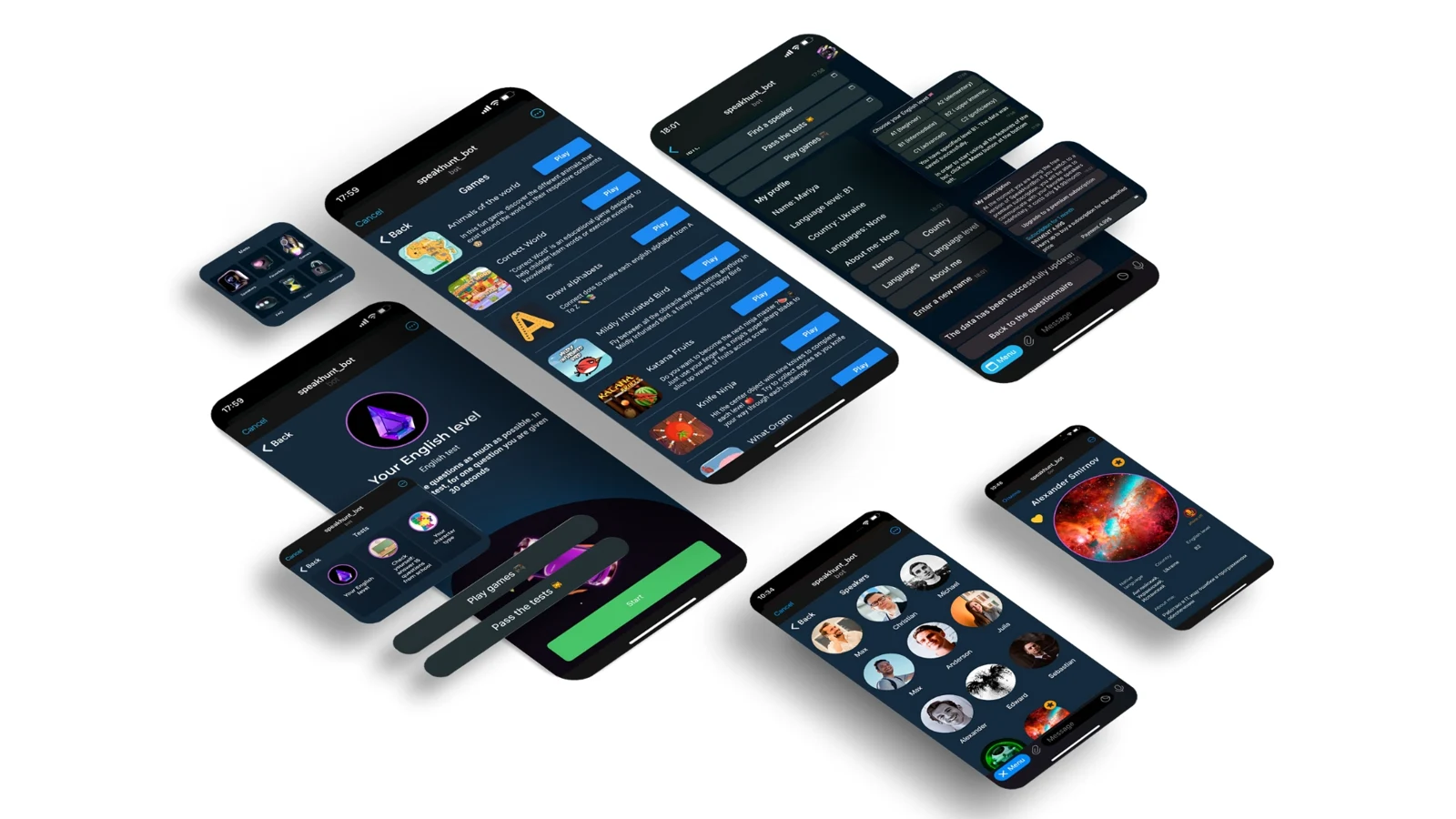
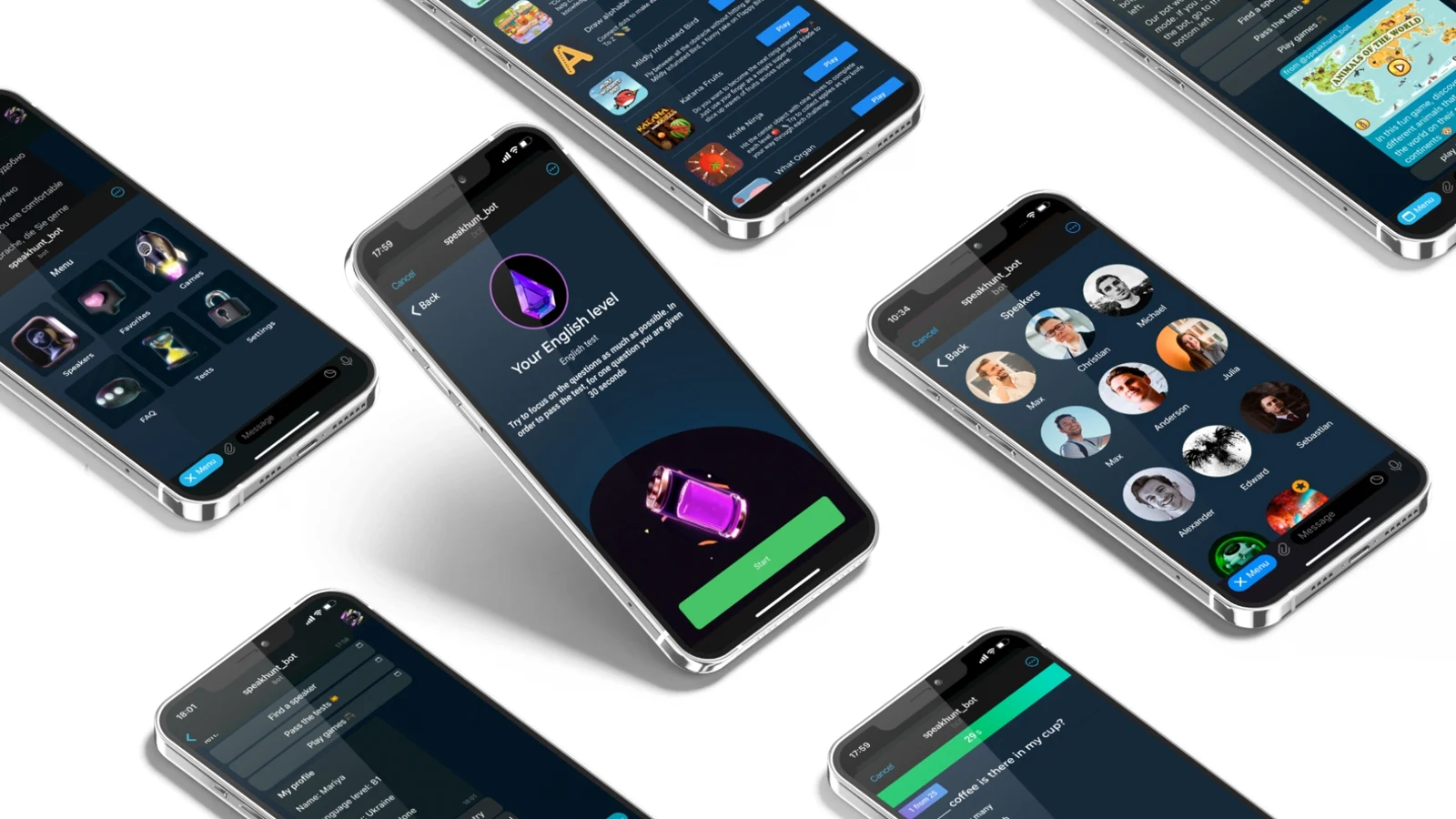
The experience connected partner discovery with profiles and real-time communication. Tests offered a way to check knowledge; educational games added another learning activity. Favorites made it possible to return to preferred conversation partners
01
Discover
Find a relevant partner
02
Profile
Check level and interests
03
Connect
Start a conversation
04
Practice
Use English in context
05
Return
Reconnect through favorites
User journey · a product model, not a conversion chart
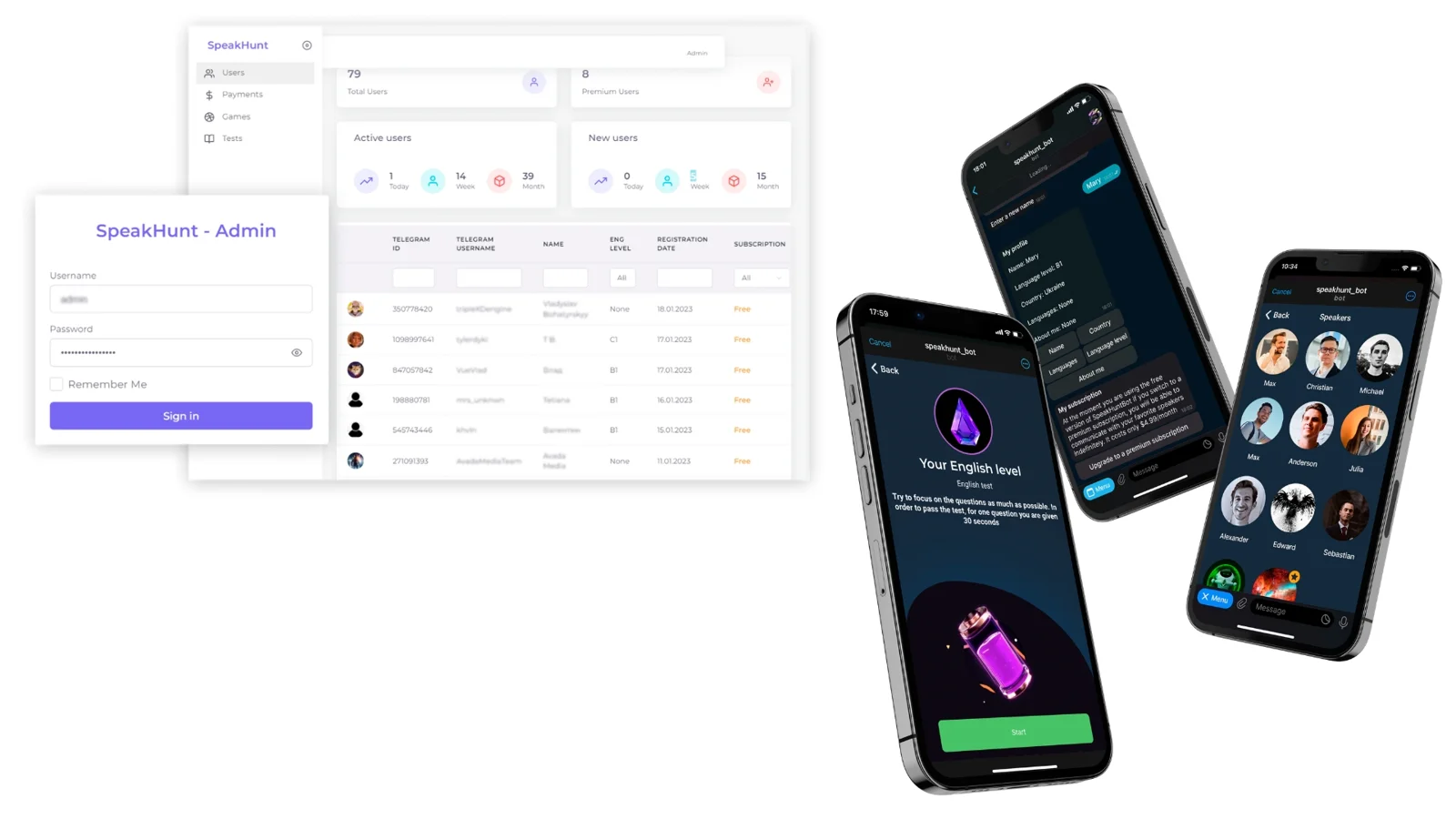
Original product screens, shown in their original interface languages. Select an image to view it in full
A usable core experience
The essential product loop needed onboarding, a language level, a profile, partner discovery and a way to communicate. The delivered product also included tests, games, subscriptions and administration. Distinguishing the core loop from supporting features makes the scope easier to reason about; it does not imply that every feature belonged to the first release
Value and monetization
The product combined a free core experience with a paid subscription that expanded functionality. From a product perspective, the important question is whether repeat practice creates enough value to support a subscription. No revenue, conversion or retention results are presented here
03 / How the product fits together
The implementation
The implementation used Telegram Web Apps with a Django backend and a Vuexy-based administration interface. Administration covered users, subscription transactions, games and test results
01
Telegram Web Apps
Profiles, partners and practice
02
Django backend
Product logic and subscriptions
03
Vuexy administration
Users, games and test results
The product perspective
A familiar platform can simplify entry, but the core value still depends on finding a suitable partner and having a useful conversation. The questions worth testing are partner availability, time to first conversation and reasons to return. These are directions for product learning, not retrospective performance claims. Speak Hunt is shown as a historical project; its former production website is not an active product destination
Ahrefs measures visits without cookies. With your permission, Google Analytics and Microsoft Clarity also help us understand navigation and improve the site. Clarity records interactions; form fields are masked.